10 marketing case studies that changed history
Sometimes, you need to take a step back to figure out your next move. That’s exactly why we put together these success stories - so you can see what worked in the past and learn how to adapt those same strategies, mechanics, and messages for today's market.
By Anastasiia Horban

From Classics to Digital
Sometimes, you need to take a step back to figure out your next move. That’s exactly why we put together these success stories - so you can see what worked in the past and learn how to adapt those same strategies, mechanics, and messages for today's market.
A single case study won't work the exact same way twice, but you can definitely take notes.
So, give us 5 minutes of your time, and we’ll give you some great content. Let’s dive in!
Nike - "Just Do It"
Emotional Marketing & Positioning
- Year: 1988
- Company: Nike
- Agency: Wieden+Kennedy
- Overview: In the late '80s, Nike was losing market share to Reebok, which was riding the wave of the aerobics boom. Nike needed a manifesto to unite professional athletes and everyday people. The slogan was inspired by a death row inmate's last words ("Let’s do it"), tweaked just a bit.
- Key Feature: The focus shifted from shoe specs to human emotion - motivation, overcoming obstacles, and taking action.
- Results: Nike's sales skyrocketed from $877 million in 1988 to $9.2 billion in 1998. The brand captured 43% of the U.S. athletic footwear market.
- Impact: The slogan became a massive part of pop culture, and the campaign transformed Nike from a sportswear manufacturer into a lifestyle philosophy brand.
De Beers - "A Diamond is Forever"
Market Creation & Cultural Shift
- Year: 1947
- Company: De Beers
- Agency: N.W. Ayer & Son
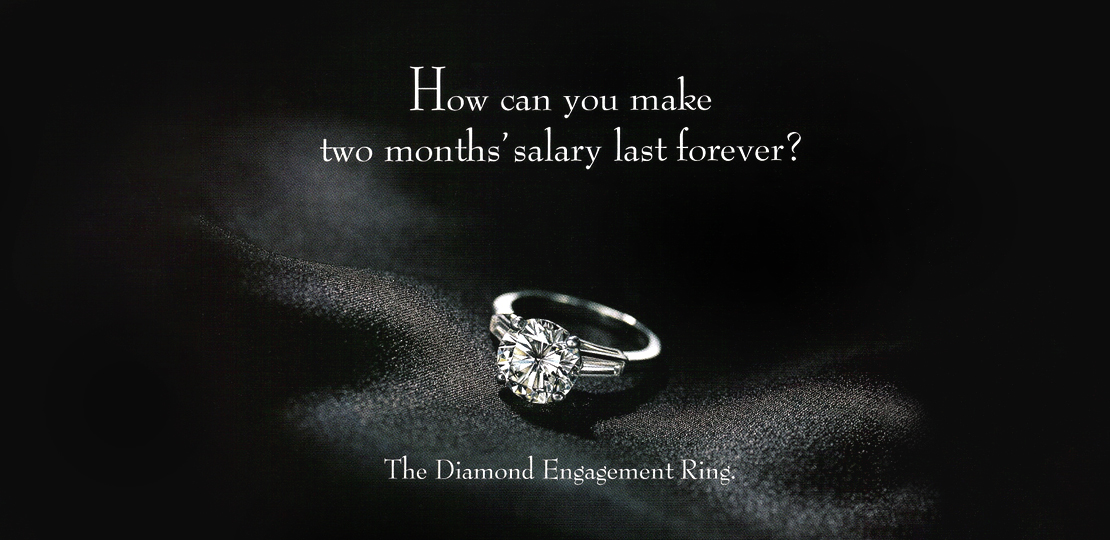
- Overview: In the first half of the 20th century, diamonds were seen as a luxury only for the ultra-wealthy, and demand was dropping. Marketers were given a clear mission: make a diamond engagement ring a must-have for every middle-class man.
- Key Feature: Introducing the idea that the size and clarity of a diamond directly reflect the strength of your love (and should cost about three months of the groom's salary).
- Results: Over 40 years (from 1939 to 1979), diamond sales in the US grew from $23 million to $2.1 billion.
- Impact: The campaign created a brand-new cultural tradition worldwide. Today, a diamond engagement ring is the default standard.
Avis - "We Try Harder"
Challenger Brand Strategy
- Year: 1962
- Company: Avis
- Agency: Doyle Dane Bernbach (DDB)
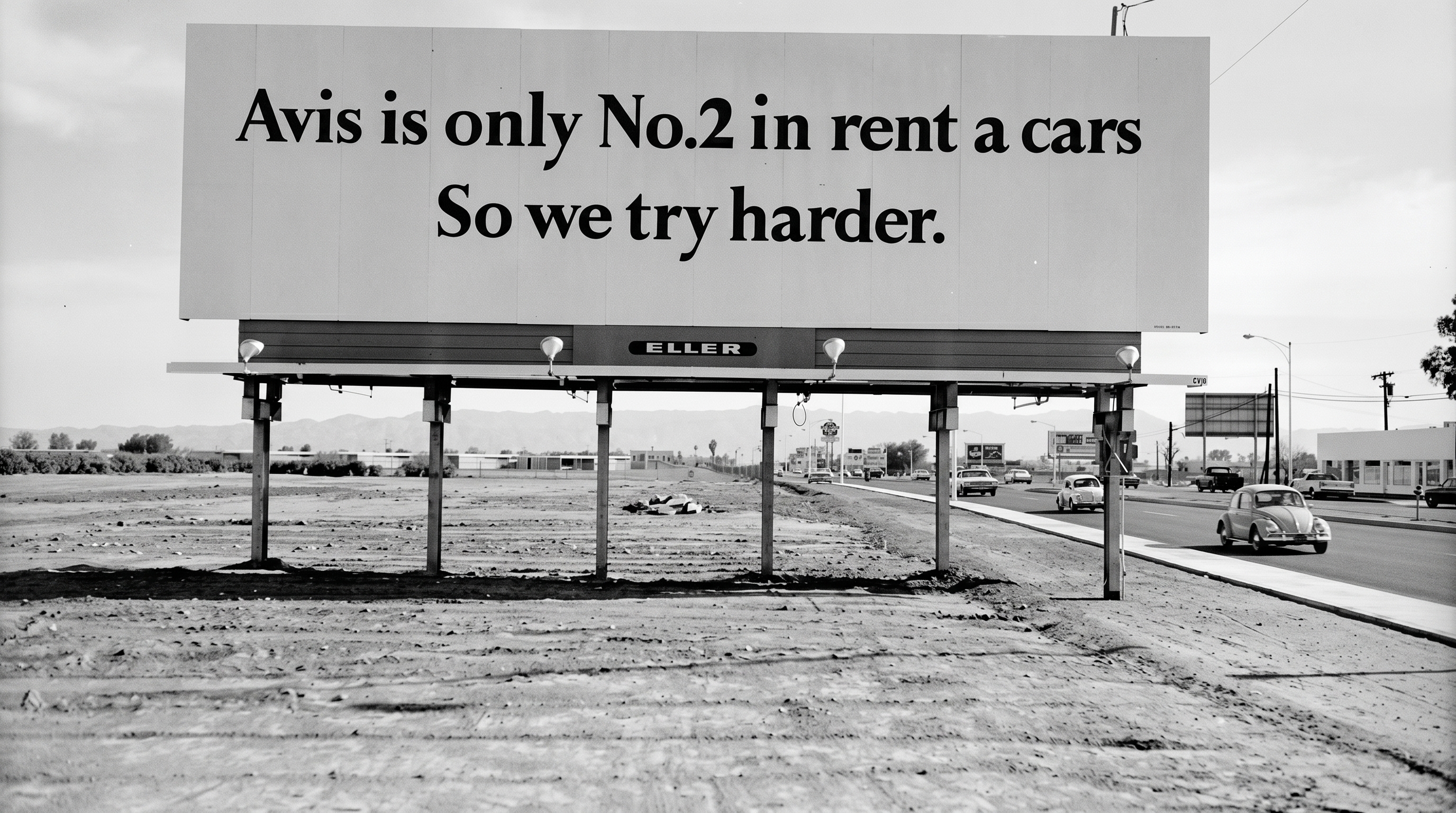
- Overview: For years, Avis was stuck in second place in the car rental market, lagging far behind the industry leader, Hertz. Instead of pretending to be the leader, the company decided to openly embrace its #2 status.
- Key Feature: Honest advertising. The positioning was: "We’re only No. 2, so we try harder (the lines are shorter, the cars are cleaner)."
- Results: In just one year, Avis went from losing money to turning a $1.2 million profit - its first profitable year in 13 years. Market share instantly went up.
- Impact: This case study proved that honesty with customers and leaning into your weaknesses can become your greatest competitive advantage.
Apple - "Think Different"
Branding & Returning to Roots
- Year: 1997
- Company: Apple
- Agency: TBWA/Chiat/Day
- Overview: In 1997, Apple was on the brink of bankruptcy. Steve Jobs returned to the company and launched an image campaign to remind the world what Apple stood for, even before releasing new products like the iMac or iPod.
- Key Feature: The ads didn't show computers at all. Instead, they featured black-and-white footage of rebels and geniuses like Einstein, Gandhi, and Lennon.
- Results: Just one year after the launch, Apple bounced back from a critical $1.04 billion loss to close 1998 with a net profit of $309 million. Its stock price tripled.
- Impact: The campaign laid the foundation for the cult of Apple as a brand for creators and innovators, setting up the highly successful launch of future devices and market leadership.
P.S. We highly recommend reading the book «Insanely Simple: The Obsession That Drives Apple's Success», which shares a lot of fascinating insider facts about Apple's growth and working with Steve Jobs.
Dove - "Real Beauty Sketches"
Purpose-Driven & Social Marketing
- Year: 2013
- Company: Dove (Unilever)
- Agency: Ogilvy & Mather (Brazil)
- Overview: The world was tired of the unrealistic beauty standards in glossy magazines. Dove brought in a forensic artist to draw women based on their own self-descriptions, and then based on descriptions from strangers who had only seen them for a few minutes. It was done blindly.
- Key Feature: A deep psychological insight: women are much harder on themselves than others are. The video highlighted the stark difference between the two sketches.
- Results: The video racked up over 114 million views in its first month, becoming the most viral ad of the year (unfortunately, the original video is no longer available). Dove’s sales grew from $2.5 billion to $4 billion in the campaign's first year.
- Impact: This case shifted how the beauty industry approaches advertising, kicking off a global trend toward natural beauty.
Old Spice - "The Man Your Man Could Smell Like"
Viral Marketing & Repositioning
- Year: 2010
- Company: Old Spice (Procter & Gamble)
- Agency: Wieden+Kennedy
- Overview: The Old Spice brand was widely seen as something only grandpas used. They needed to win over a younger audience. Research showed that 60% of men's body wash purchases were actually made by women.
- Key Feature: A hilarious commercial starring Isaiah Mustafa that targeted both men and women. They also used real-time responses: the actor recorded personalized video replies to users on Twitter and YouTube.
- Results: Body wash sales jumped by 107% in the first few months. The brand’s channel became the #1 most-viewed channel on YouTube.
- Impact: The campaign became the gold standard for using humor and interactive content to completely revitalize an outdated brand.
Coca-Cola - "Share a Coke"
Personalization & Digital Integration
- Year: 2011 (Started in Australia, then rolled out globally)
- Company: Coca-Cola
- Agency: Ogilvy & Mather
- Overview: Soda sales among young people were dropping. The brand decided to bring a touch of personalization to a mass-market product.
- Key Feature: Replacing the classic logo on bottles with the 150 most popular names, as well as labels like "Best Friend," "Family," and more.
- Results: The pilot launch in Australia led to the sale of 250 million personalized bottles and a 7% increase in consumption among young adults. In the US, the campaign boosted sales by 2.5%, stopping an 11-year downward trend. Meanwhile, the #ShareACoke hashtag became the #1 global trend, generating over 500,000 user photos on Instagram and over 6 million virtual bottles sent.
- Impact: This case proved the power of personalization in mass retail. People weren’t just buying the drink for the taste; they were buying it for the experience and the social media content.
P.S. This campaign is still going strong today, meaning it has been running for over 15 years!
Red Bull - "Stratos"
Sponsorship, PR & Content Marketing
- Year: 2012
- Company: Red Bull
- Agency: In-house marketing team
- Overview: Instead of buying traditional ad space, Red Bull funded Austrian skydiver Felix Baumgartner’s freefall from the stratosphere (a height of 24 miles / 39 km).
- Key Feature: Creating a massive, global media event. The brand didn't just act as a sponsor; they were the actual organizers of a major scientific and athletic milestone.
- Results: The YouTube live stream drew 8 million concurrent viewers (a record at the time). In the first six months after the jump, Red Bull's sales increased by 7% (to $5.2 billion). The media coverage was valued at hundreds of millions of dollars in free PR value.
- Impact: This move turned the energy drink brand into a full-scale media company, proving that extreme, high-quality content sells better than direct advertising. The brand stopped being just a product - it became an experience and an emotional association.
Spotify - "Wrapped"
Data-Driven Marketing & UGC
- Year: 2016 – Present
- Company: Spotify
- Agency: In-house marketing team
- Overview: At the end of every year, Spotify rounds up personalized user stats (top songs, genres, listening minutes) and packages them into vibrant, highly shareable cards.
- Key Feature: Using Big Data to create highly individualized content for every single customer. Users end up promoting the service themselves for free.
- Results: The campaign’s growth has been massive: while it engaged 30 million people in 2017, that number jumped to 156 million users in 2022, with 60 million sharing their results on social media without any paid push. Every December release creates a massive viral loop - for instance, in 2020, Wrapped drove a 21% spike in mobile app downloads in the first week of December alone.
- Impact: This case proved that user data analysis doesn't have to be boring spreadsheets; it can actually be your most powerful viral marketing tool.

Oreo - "Dunk in the Dark"
Real-Time Marketing (RTM)
- Year: 2013
- Company: Oreo (Mondelez)
- Agency: 360i
- Overview: During the Super Bowl final (the most expensive ad time in the US), the stadium lights went out for 34 minutes. Oreo's marketing team reacted on the fly.
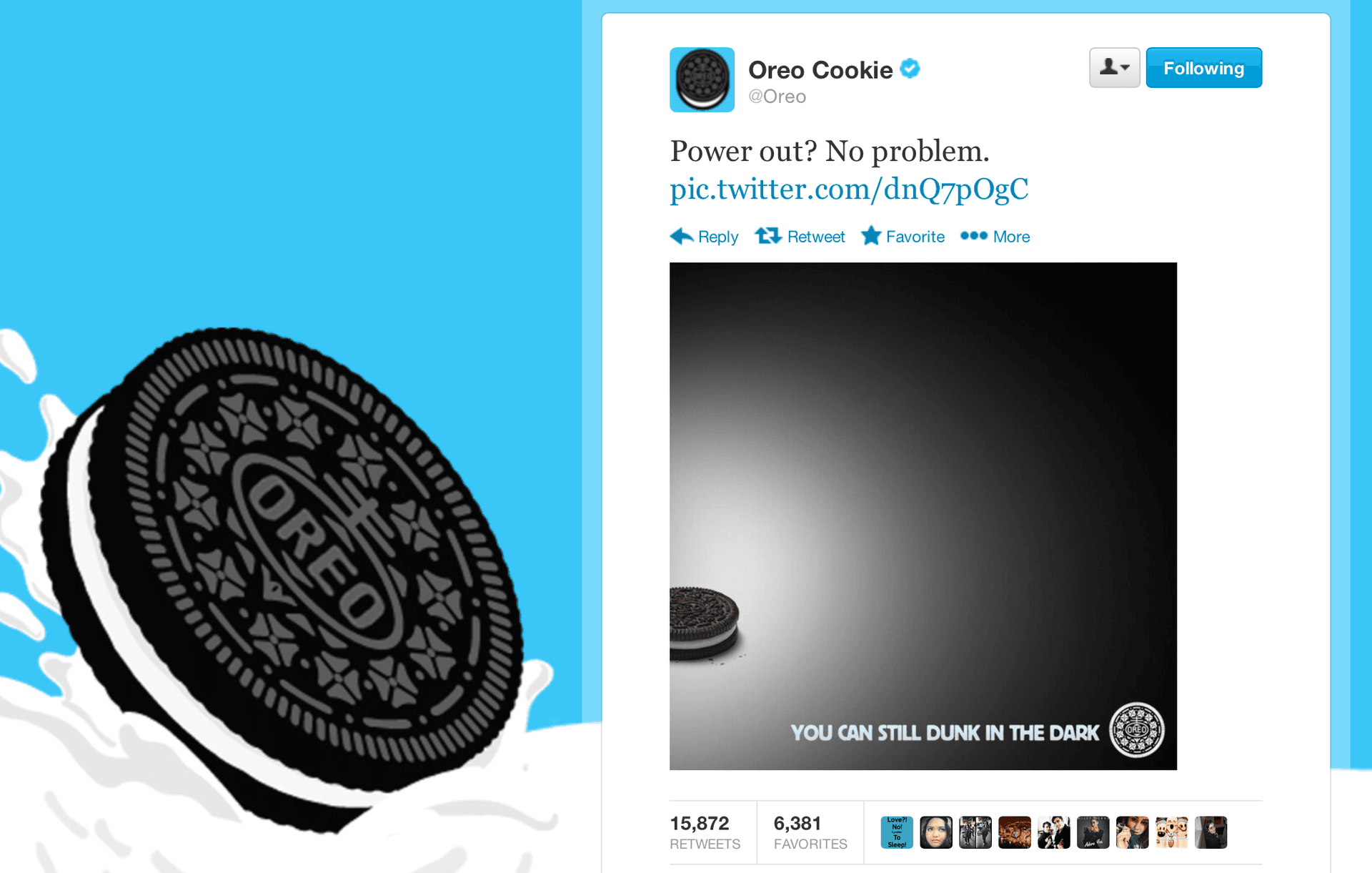
- Key Feature: Within 10 minutes, the brand tweeted a simple graphic of a cookie in the dark with the caption: "You can still dunk in the dark."
- Results: The post got over 15,000 retweets in a matter of hours. Oreo’s tweet was talked about in the news more than the actual Super Bowl commercials, which other brands paid $4 million per 30 seconds to air.
- Impact: This moment essentially kicked off the era of real-time marketing (RTM). Companies realized that being quick and clever on social media can sometimes be way more effective than multi-million dollar budgets.
Comment from the MAD Founder: "These case studies shaped the history of marketing. They prove over and over again that marketing is a tool designed to drive business growth and revenue. Sometimes, the simplest solution is the most effective. Our job is to learn from these moments, take the core takeaways, and apply them to today’s landscape."