Marella Cruises Turns Cruise Advertising Into a Retold Story
Marella Cruises' Your Next Story campaign sells the holiday as something over-40s will want to remember, retell, and recognize. Leo UK and Brace Productions built the work around a couple recounting their cruise, with nostalgia, vintage-lens treatment, and a broad media mix doing the heavy lifting.
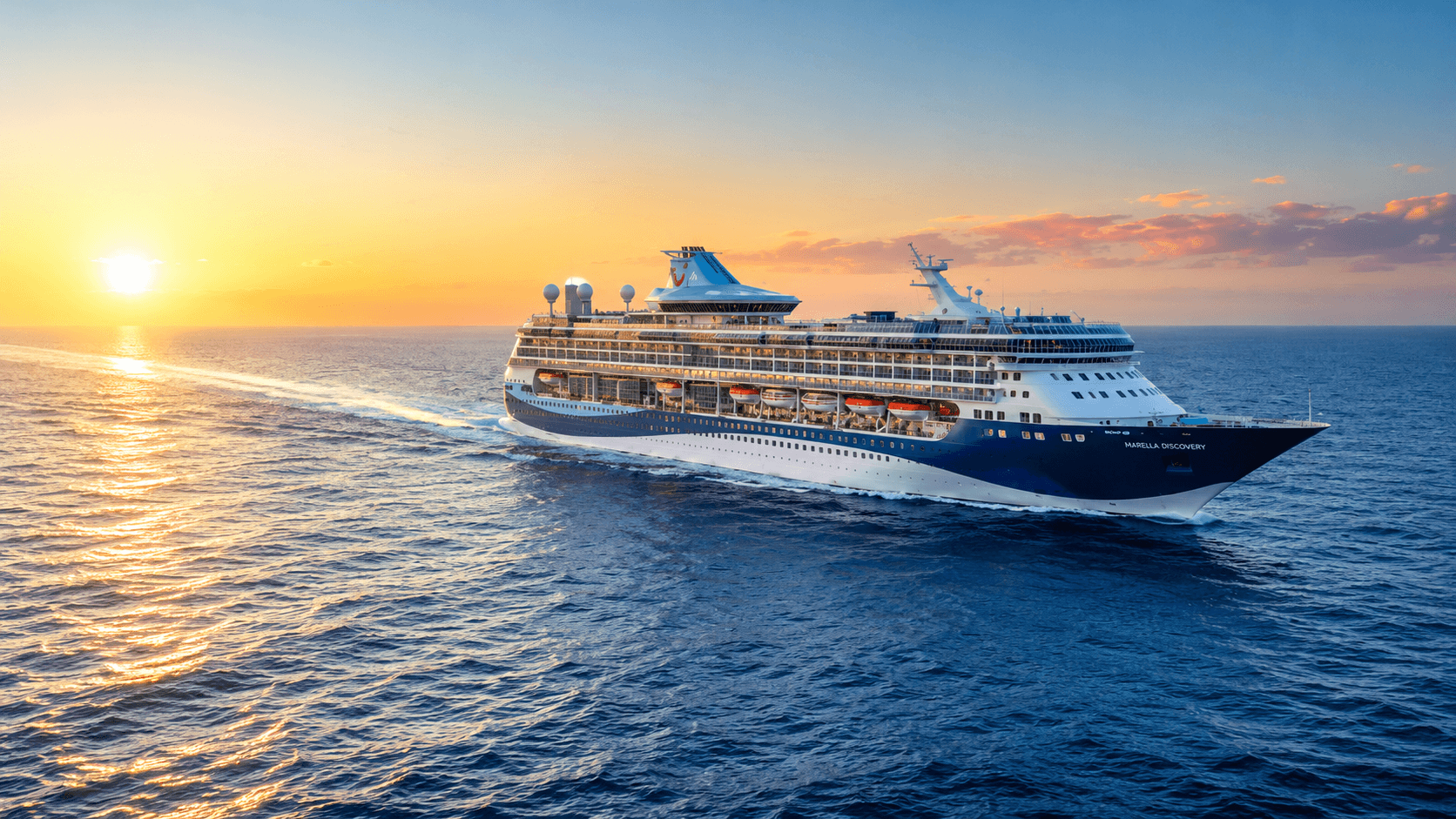
Description
Your Next Story is Marella Cruises' new integrated brand campaign, built to challenge cruise stereotypes and position the brand as a fit for curious, adventurous, self-aware over-40s. The creative uses the idea of a holiday story being told and retold, rather than a glossy destination reel, to keep the audience and the memory at the center.
Travel advertising has a habit of smoothing the edges off life, but Your Next Story does the opposite.
Creative mechanics
The campaign is built around one clear device: a couple in mid-conversation remembering a cruise holiday. Vintage lenses, a soft dreamlike visual treatment and Faces' Ooh La La all reinforce the sense of nostalgia and emotional pull. Marella also says it wanted to show an audience that is not winding down, but just getting going.
- The 40-second lead advert follows a 40-something couple mid-story, rather than a polished destination montage.
- Vintage lenses give the film a soft, memory-like look that matches the retelling concept.
- Faces' Ooh La La adds nostalgia and character to the soundtrack.
- The brand frames over-40s as curious, adventurous and self-aware, not passive or past their prime.
Channel and distribution read
- The campaign is live across TV, on demand, print, digital and social media.
- Broadcast placements include ITV, Channel 4, STV and Sky.
- Media was planned and bought by EssenceMediacom.
Results
No numeric results were published in the sources reviewed. The observable signal is the breadth of the rollout: Marella launched the campaign as a multi-channel integrated push with a named media buy and a 40-second lead film, but there is no public reach, response, booking or revenue readout yet. (tuigroup.com)
01
No impressions, reach, booking uplift or sales figures were published. (tuigroup.com)
02
The clearest proof point in the public record is the launch footprint, not a performance dashboard. (tuigroup.com)
Lowlights
The public materials leave a few gaps: no budget, no creative-testing detail, no audience split beyond over-40s, and no evidence yet of whether the campaign moved bookings or brand lift. (tuigroup.com)
- No spend figure or media weight was published. (tuigroup.com)
- No audience-performance data or post-launch outcome was shared. (tuigroup.com)
- The sources reviewed do not show any test-and-learn or variant comparison. (tuigroup.com)
Industry opinions
No meaningful outside reaction was found in the sources reviewed. Public coverage was concentrated in launch reporting and brand-owned commentary rather than analyst notes, creator commentary or customer response. (tuigroup.com)
Takeaways
For a category with stale stereotypes, Marella's move is to challenge the cliché directly instead of just polishing the visuals. The brand uses one narrative device across the whole system, which makes the campaign easy to recognize even before a logo appears.
- Take 01
If your category is stuck on old stereotypes, make the creative push directly against them instead of just updating the visuals.
- Take 02
Pick one narrative device and repeat it across the system. Here, storytelling shows up in the script, the visual treatment and the soundtrack.
- Take 03
If you do not have performance data yet, say so plainly and still document the media plan and execution details. That keeps the case useful instead of inflated.