LENOVO TESTED WORLD CUP EMOTIONAL CONTEXT. AWARENESS +94%.
Lenovo and Seedtag ran a UK-controlled test around FIFA World Cup 2026 messaging, comparing neuro-contextual targeting with standard contextual targeting among enterprise decision-makers.
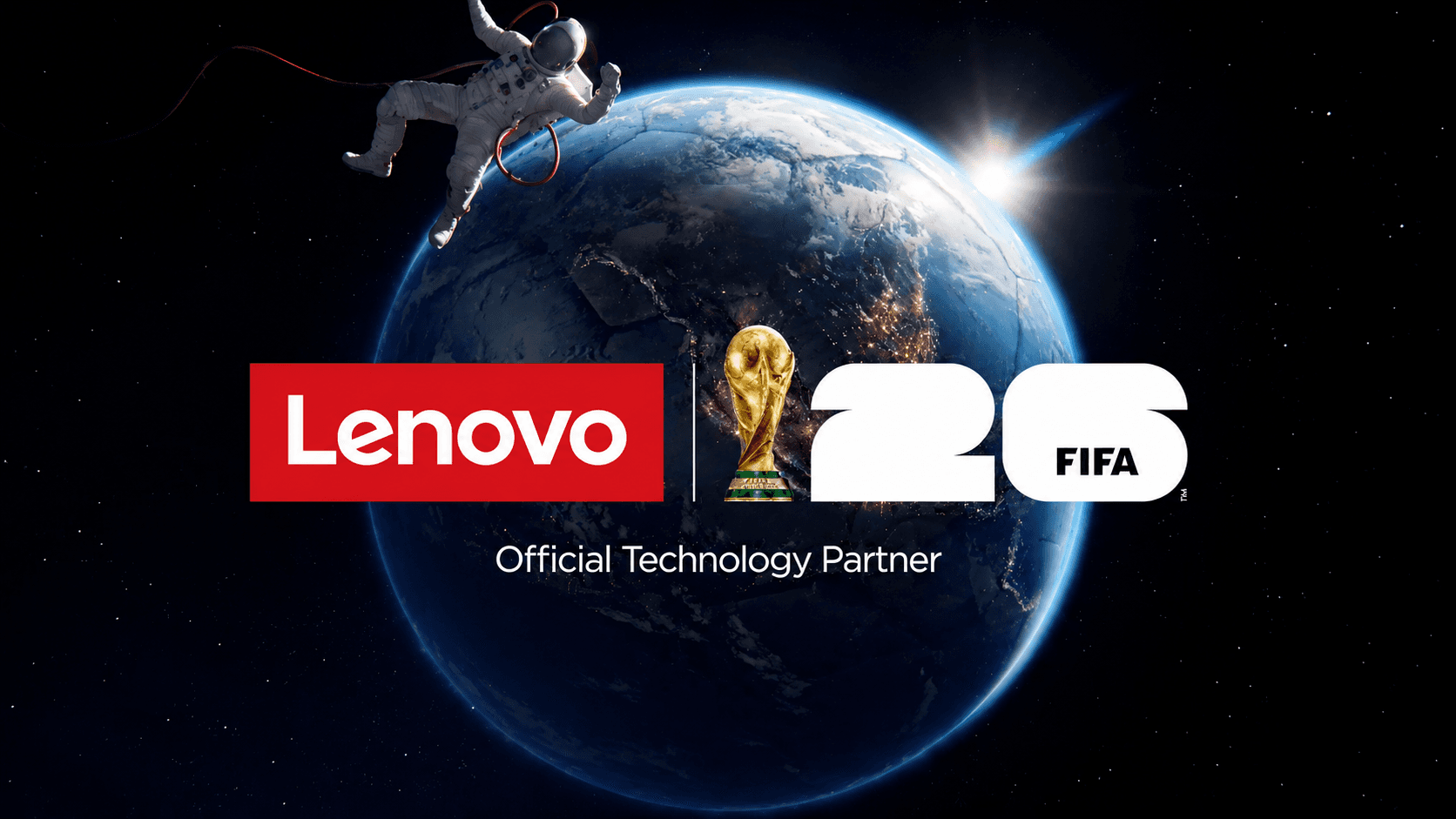
Lenovo used its FIFA World Cup 2026 and FIFA Women’s World Cup 2027 technology partnership as the proof point for a UK enterprise brand campaign, then tested whether Seedtag’s neuro-contextual targeting could outperform standard contextual targeting among IT decision-makers and C-suite executives.
Campaign or Product Move
The move was not just a World Cup sponsorship ad buy. Lenovo and Seedtag framed the campaign around Lenovo’s role as FIFA’s Official Technology Partner, using the tournament to reinforce Lenovo’s positioning in AI, innovation, and technology leadership for mid-to-large enterprise buyers. Seedtag’s Liz AI was used to identify content environments where senior decision-makers were expected to be more emotionally receptive to Lenovo’s message, rather than only matching ads to football or technology content categories. The campaign ran as a controlled test in the UK, comparing Seedtag’s neuro-contextual targeting with standard contextual targeting over the same flight period.
Why it works
The campaign connects a broad sports moment to a specific B2B credibility story. Lenovo’s public FIFA activity is about infrastructure, AI, broadcast operations, devices, and analytics, which gives the brand a practical reason to appear in World Cup coverage beyond logo exposure. Seedtag’s targeting layer then tried to narrow that attention to moments of receptivity: excitement for awareness, desire for favourability and consideration, and optimism for incremental reach around future-facing business themes.
The sponsorship context gave Lenovo a live, high-attention platform for an enterprise AI message.
The controlled test made the media strategy more useful than a standard campaign recap, because it compared neuro-contextual targeting against standard contextual targeting during the same flight period.
The measurement stack combined brand lift research from Kantar with attention analysis from Lumen Research, giving the case both perception and attention evidence.
The strongest reported lifts came from emotional contexts, not just relevant content categories, which is the core claim Seedtag wanted the campaign to prove.
Putting your message in the right moment, not just the right content, drives significantly stronger outcomes.
Results
Exact campaign spend, total reach, cost metrics, and business outcomes were not found. The public results focus on brand lift, attention, and emotional-context performance.
Kantar measured brand lift across a sample of 500 IT decision-makers and C-suite executives, while Lumen Research analyzed attention.
Reported outcomes include:
- +94% top-of-mind awareness, +27% unaided awareness, and +74% message association for excitement-led contexts;
- +8% brand favourability and +6% brand consideration for desire-led contexts; and overall consideration of 71%.
- Attention also exceeded benchmark levels, with an APM score of 1,940 versus a Lumen benchmark of 1,109, and a 55.4% view rate versus 47.2%.
Industry Opinions
Seedtag’s Adrien Boyer positioned the work as a move beyond keyword and category-based contextual targeting toward interest, intent, and emotion. Lenovo’s Barbara Falanga said the campaign helped the brand identify environments that drove stronger engagement and brand impact, and that the insights were already shaping future activity. Public Lenovo sources independently support the broader strategic context: Lenovo is using the World Cup to demonstrate AI infrastructure, broadcast, operational, device, and analytics capabilities at global sports scale.
Takeaways
The useful lesson is not simply “advertise around sport.” Lenovo had a business-relevant sponsorship story, then used contextual testing to find which emotional environments made that story more memorable for enterprise buyers. For marketers, the case is strongest as a media planning and measurement example: define the brand association you want, test the context mechanism against a control, and separate awareness effects from consideration effects.
- Use a mass cultural moment only when the brand has a credible role in the event. Lenovo’s AI and infrastructure role made the World Cup message relevant to enterprise technology buyers.
- Do not treat contextual targeting as one tactic. This case compared standard contextual placement with an emotion-and-intent layer, which made the targeting hypothesis measurable.
- Report emotional segments separately. Excitement appeared to drive awareness metrics, while desire was tied to favourability and consideration.
- Ask for the missing operating data before copying the playbook: spend, flight dates, publisher mix, creative units, baseline levels, and statistical confidence.
- For B2B brands, pair attention metrics with brand lift. Attention alone would not show whether Lenovo’s AI and technology-leadership message actually landed.
Campaign or Product Move
The move was not just a World Cup sponsorship ad buy. Lenovo and Seedtag framed the campaign around Lenovo’s role as FIFA’s Official Technology Partner, using the tournament to reinforce Lenovo’s positioning in AI, innovation, and technology leadership for mid-to-large enterprise buyers. Seedtag’s Liz AI was used to identify content environments where senior decision-makers were expected to be more emotionally receptive to Lenovo’s message, rather than only matching ads to football or technology content categories. The campaign ran as a controlled test in the UK, comparing Seedtag’s neuro-contextual targeting with standard contextual targeting over the same flight period.
Why it works
The campaign connects a broad sports moment to a specific B2B credibility story. Lenovo’s public FIFA activity is about infrastructure, AI, broadcast operations, devices, and analytics, which gives the brand a practical reason to appear in World Cup coverage beyond logo exposure. Seedtag’s targeting layer then tried to narrow that attention to moments of receptivity: excitement for awareness, desire for favourability and consideration, and optimism for incremental reach around future-facing business themes.
- The sponsorship context gave Lenovo a live, high-attention platform for an enterprise AI message.
- The controlled test made the media strategy more useful than a standard campaign recap, because it compared neuro-contextual targeting against standard contextual targeting during the same flight period.
- The measurement stack combined brand lift research from Kantar with attention analysis from Lumen Research, giving the case both perception and attention evidence.
- The strongest reported lifts came from emotional contexts, not just relevant content categories, which is the core claim Seedtag wanted the campaign to prove.
Results
01
Exact campaign spend, total reach, cost metrics, and business outcomes were not found. The public results focus on brand lift, attention, and emotional-context performance. Kantar measured brand lift across a sample of 500 IT decision-makers and C-suite executives, while Lumen Research analyzed attention. Reported outcomes include +94% top-of-mind awareness, +27% unaided awareness, and +74% message association for excitement-led contexts; +8% brand favourability and +6% brand consideration for desire-led contexts; and overall consideration of 71%. Attention also exceeded benchmark levels, with an APM score of 1,940 versus a Lumen benchmark of 1,109, and a 55.4% view rate versus 47.2%.
Friction or Risks
The public case is strong on lift metrics but light on operating detail. It does not disclose media spend, impression volume for the full campaign, exact creative formats, publishers, baseline awareness levels, flight dates, or how the standard contextual control was built. That makes the topline uplift useful, but not enough for another marketer to benchmark cost efficiency or reproduce the setup. The case also comes through a PressBox-style announcement centered on Seedtag’s product claim, so editors should treat the interpretation as vendor-led unless Lenovo or measurement partners publish a deeper methodology.
- The +94% figure is tied to top-of-mind awareness in the excitement segment; it should not be presented as total brand awareness across the entire campaign.
- The sample size was disclosed as 500 IT decision-makers and C-suite executives, but the public article does not provide the full questionnaire or statistical confidence details.
- Attention beat Lumen benchmarks, but public reporting does not show placement-level performance or creative-level variance.
- No sales pipeline, lead quality, account engagement, or enterprise buying outcome was reported.
Industry Opinions
Meaningful independent industry reaction was not found in the available public sources. The article includes first-party commentary from Seedtag and Lenovo, plus third-party measurement references to Kantar and Lumen Research. Seedtag’s Adrien Boyer positioned the work as a move beyond keyword and category-based contextual targeting toward interest, intent, and emotion. Lenovo’s Barbara Falanga said the campaign helped the brand identify environments that drove stronger engagement and brand impact, and that the insights were already shaping future activity. Public Lenovo sources independently support the broader strategic context: Lenovo is using the World Cup to demonstrate AI infrastructure, broadcast, operational, device, and analytics capabilities at global sports scale.
Takeaways
The useful lesson is not simply “advertise around sport.” Lenovo had a business-relevant sponsorship story, then used contextual testing to find which emotional environments made that story more memorable for enterprise buyers. For marketers, the case is strongest as a media planning and measurement example: define the brand association you want, test the context mechanism against a control, and separate awareness effects from consideration effects.
- Take 01
Use a mass cultural moment only when the brand has a credible role in the event. Lenovo’s AI and infrastructure role made the World Cup message relevant to enterprise technology buyers.
- Take 02
Do not treat contextual targeting as one tactic. This case compared standard contextual placement with an emotion-and-intent layer, which made the targeting hypothesis measurable.
- Take 03
Report emotional segments separately. Excitement appeared to drive awareness metrics, while desire was tied to favourability and consideration.
- Take 04
Ask for the missing operating data before copying the playbook: spend, flight dates, publisher mix, creative units, baseline levels, and statistical confidence.
- Take 05
For B2B brands, pair attention metrics with brand lift. Attention alone would not show whether Lenovo’s AI and technology-leadership message actually landed.