DoorDash Turns College Football’s NIL Era Into a Fan Rewards Engine
DoorDash’s Don’t Fan For Free uses Lane Kiffin, Jameis Winston and Reggie Bush to turn college-football fandom into a season-long ordering loop, combining self-aware comedy, Saturday rewards and campus activations.
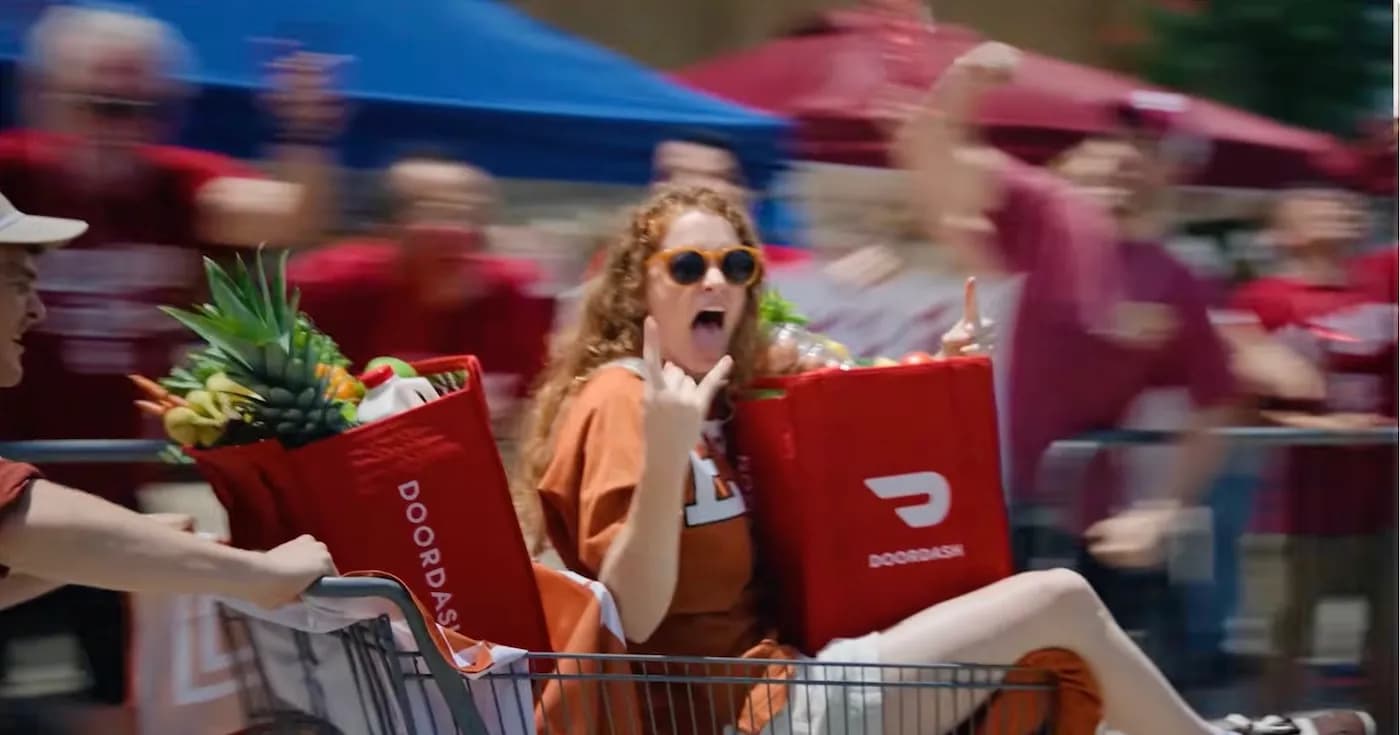
DoorDash launched Don’t Fan For Free in the United States on August 24, 2026, making college-football fans the target of an NIL-era joke and a season-long commerce program. With Lane Kiffin, Jameis Winston and Reggie Bush fronting film and social work, the brand is pairing humor about the sport’s changed economics with Saturday ordering rewards, free Student DashPass and a 12-school campus activation footprint.
The idea started with NIL and just how dramatically it has changed the culture of college football in recent years.
Description
Don’t Fan For Free is DoorDash’s bid to earn a durable role in the U.S. college-football Saturday ritual, not simply borrow attention from it. The campaign reframes the NIL era’s deal-making culture around the people who organize watch parties, tailgates and game-day orders but do not receive player-style perks. Its notable move is the connection between a broad entertainment idea and repeatable in-app behavior: fans can see a joke about college-football history in the work, then encounter weekly deals, prize entries and a student-membership offer inside the DoorDash ecosystem. MikeTeevee led the agency work, with Invisible Collective and a wider production, media and sports-partnership group supporting the rollout.
Highlights
- The season-long platform stars LSU coach Lane Kiffin, former Florida State quarterback Jameis Winston and former USC running back Reggie Bush.
- The asset system includes a 45-second hero film, 30- and 15-second cutdowns, and three original 15-second social films.
- The social films use a mockumentary format built to work as standalone pieces, with references and Easter eggs tied to college-football and NIL history.
- DoorDash Streaks rewards Saturday ordering with weekly deals and entries toward monthly prizes.
- Free Student DashPass is available nationally through October 12, 2026.
- The live program spans 12 college partners, a nine-stop National Tailgate Tour and a DoorDash Transfer Portal fan experience.
- Production used two roaming cameras, split units, practical builds and in-camera effects; one Reggie Bush sequence used a golf-cart pulley system to fly a cooler.
Results
01
Exact effectiveness results were not publicly disclosed as of September 4, 2026. No paid-media reach, earned reach, spend, sales lift, conversion figure or brand-lift result has been published. The observable evidence is distribution rather than performance: DoorDash deployed a film-and-social package, embedded rewards in its app, offered Student DashPass nationally through October 12, and placed the program across 12 college partnerships with a nine-stop tailgate tour. The campaign’s real test is whether those connected touchpoints create repeat Saturday ordering, but that outcome cannot yet be verified.
Lowlights
- The public record contains no campaign spend, reach, sales, conversion or brand-lift data, so creative attention cannot be separated from commercial impact.
- Most coverage is launch-period material. Independent evidence of whether the work changed ordering behavior or brand preference has not surfaced.
- Streaks and sweepstakes mechanics introduce eligibility rules, ordering requirements and local terms that can reduce participation and complicate attribution.
- The premise relies on fans understanding specific pre-NIL history around its talent. The Easter eggs may reward insiders while leaving more casual viewers with less of the joke.
- A prize-led offer can motivate transactions, but it also risks training audiences to respond to incentives more than to DoorDash’s core service value.
MAD’s Verdict
This is a smart sports-marketing move because DoorDash does not stop at casting recognizable football figures or buying game-day attention. It gives the campaign a behavior to own: order on Saturday, return next week, and get something for showing up. The NIL framing makes that loop feel native to the 2026 college-football conversation rather than bolted onto a generic promotion. The brand is betting that fandom is a recurring consumption occasion and that students and watch-party organizers are worth acquiring before their routines harden. It will win where the joke, the offer and the ordering moment arrive together, especially around campus and game-day gatherings. It will fail if the prizes become the only remembered part, because then DoorDash has funded a sweepstakes rather than built a sharper reason to choose the app every Saturday.
Industry Opinions
Forbes highlighted how Kiffin, Winston and Bush make the pre-NIL premise work: their personal histories provide the campaign’s self-aware comedic material while the campus program extends the idea into live fan experiences.
LBBOnline focused on the fan-value proposition, framing the work as a way to give supporters deal-oriented treatment through Saturday ordering rewards, prizes and campus activity.
Takeaways
- Take 01
If a cultural moment has a built-in ritual, attach the offer to the ritual’s recurring day or action; DoorDash made Saturday ordering the campaign’s repeatable unit.
- Take 02
If celebrity casting could feel opportunistic, choose talent whose real history is part of the creative premise; the humor works because the NIL shift intersects with Winston and Bush’s public football narratives.
- Take 03
If the campaign needs both reach and conversion, design social assets as native standalone entertainment while making the app the place where the reward loop lives.
- Take 04
If student acquisition matters, combine a national membership offer with local physical presence; the Student DashPass offer and campus tour give DoorDash both scale and proximity.
- Take 05
If a sports partnership spans many schools, create one flexible fan experience that travels; the Transfer Portal format can be localized without rebuilding the central idea each time.