David Beckham became the World Cup’s default celebrity shortcut
Pepsi, McDonald’s, Adidas, Stella Artois and other brands leaned on Beckham at the same time, making him more memorable than the brands themselves.
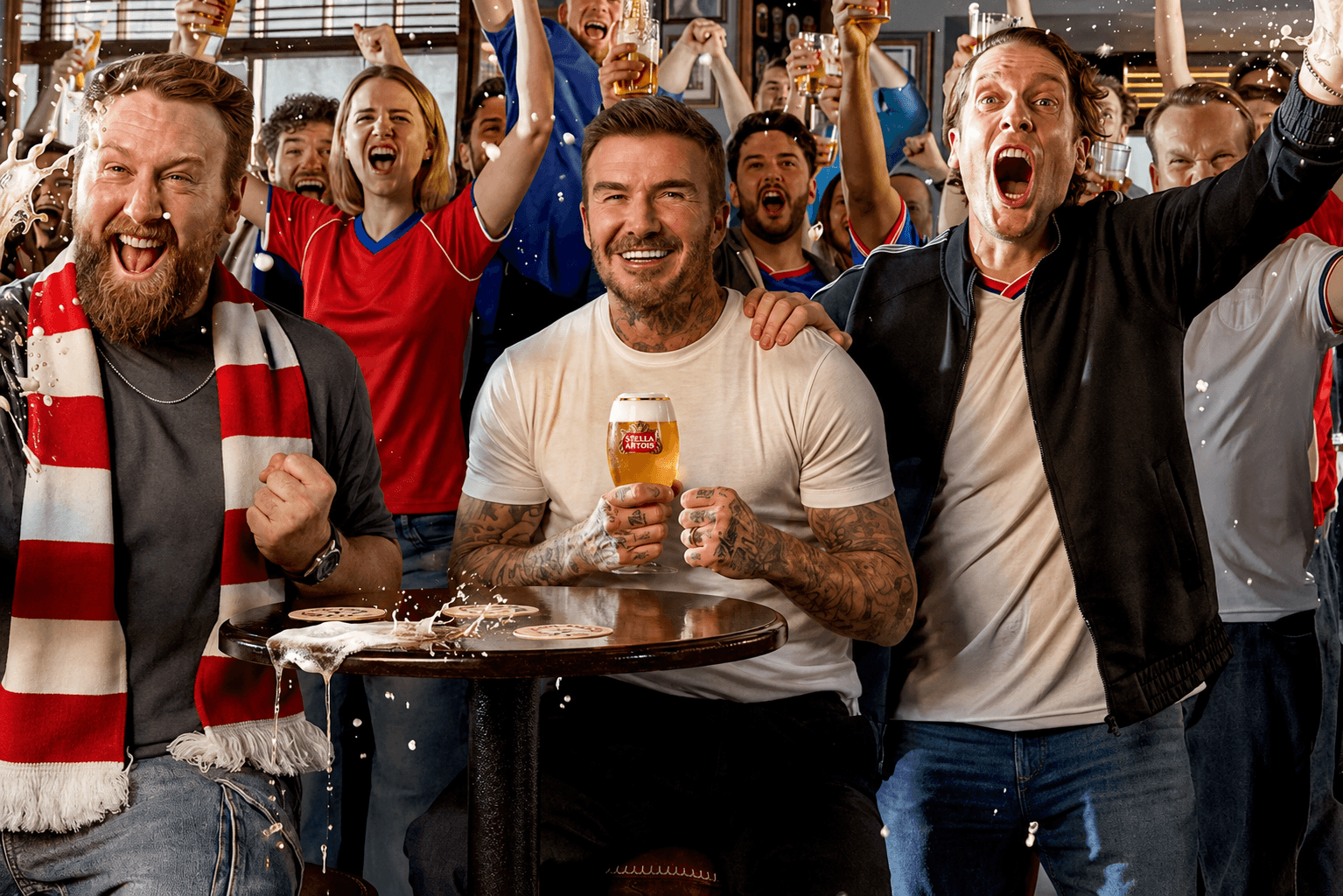
At this World Cup, David Beckham wasn’t just in one campaign — he was spread across several. Beckham appearing for Pepsi, McDonald’s, Nespresso, Ninja, Walkers, Adidas, Boss and Stella Artois, BUT the audience remembers Beckham, not brands.
| Brand | Beckham usage | Why it mattered |
|---|---|---|
| Pepsi | He fronted a Pepsi campaign and helped give fans their say. | It plugged Beckham into a high-visibility World Cup sponsorship slot, but also increased the risk that the celebrity overshadowed the brand. |
| McDonald’s | He promoted collectible cups. | A familiar global celebrity cue in a mass-market activation, but one that can blur with other Beckham-led ads. |
| Nespresso | He was shown drinking Nespresso. | Proof that Beckham was being used across adjacent lifestyle categories, not just football-specific ones. |
| Ninja | He was shown making coffee on a Ninja machine. | Another category touchpoint that adds reach, but also adds to the pile-up. |
| Walkers | He fronted Walkers. | A snack-brand placement that reinforces the article’s point about Beckham spanning multiple product categories at once. |
| Adidas | He played cage football for Adidas. | This is the cleanest fit in the article because it connects Beckham’s football identity to the brand’s sportswear territory. |
| Boss | He modeled Boss. | Shows Beckham’s value as a fashion and lifestyle face, not only a sports figure. |
| Stella Artois | He appeared in a celebration-led moment for Stella Artois. | The article uses it as another example of how the same celebrity can travel across categories during a compressed campaign window. |
What changed
The shift was not that Beckham suddenly became available; it was that too many brands reached for the same shortcut at the same moment. Beckham moved from being a standout ambassador to a shared visual convention across coffee, burgers, crisps, soft drinks, beer, sportswear and fashion.
Description
The piece is a strategy commentary on World Cup advertising, not a campaign launch note. Its core argument is simple: Beckham’s long-running commercial value made him a logical choice for brands trying to ride football culture, especially in a tournament framed as "America’s World Cup" because of his MLS and Inter Miami ties. (thedrum.com)
Highlights
- Beckham’s value is cross-category.
- The most believable fit in the source is Adidas, where Beckham’s football credibility aligns with the brand territory.
- The strongest strategic upside is instant recognition, especially in a short World Cup attention cycle.
Results
01
Exact numeric results were not found in the supplied source. The visible result, according to the article, is that Beckham became highly memorable across the tournament while the brands behind the ads became harder to separate from one another. (thedrum.com)
Lowlights
- Attention did not guarantee attribution; people can remember the celebrity while forgetting the sponsoring brand.
- Repeated use of the same face across different categories made some partnerships feel rented rather than earned.
- As more brands used Beckham, the endorsement shortcut risked becoming category convention instead of a differentiator.
Industry Opinions
No meaningful outside reaction was included in the supplied source. The only sourced perspective is Neil Bennett’s argument that celebrity fame is useful for attention, but long-term brand value comes from distinctive memorability, not simply renting a famous face. (thedrum.com)
Takeaways
- Take 01
If a celebrity is showing up in multiple places, make sure your brand cue lands before the fame cue.
- Take 02
Use a well-known face only when the connection to your category is clear enough to feel earned, not copied.
- Take 03
In a crowded tentpole moment, the safer long-term bet is a distinctive idea or tone that can still be recognized without the celebrity attached.