Coca-Cola Makes Its Local Supply Chain the Story in Counter Cultures
Coca-Cola Great Britain traces a can from its Wakefield factory to family-run pubs, cafés and takeaways, using real workers, local operators and community funding to make a global brand feel locally embedded.
Description
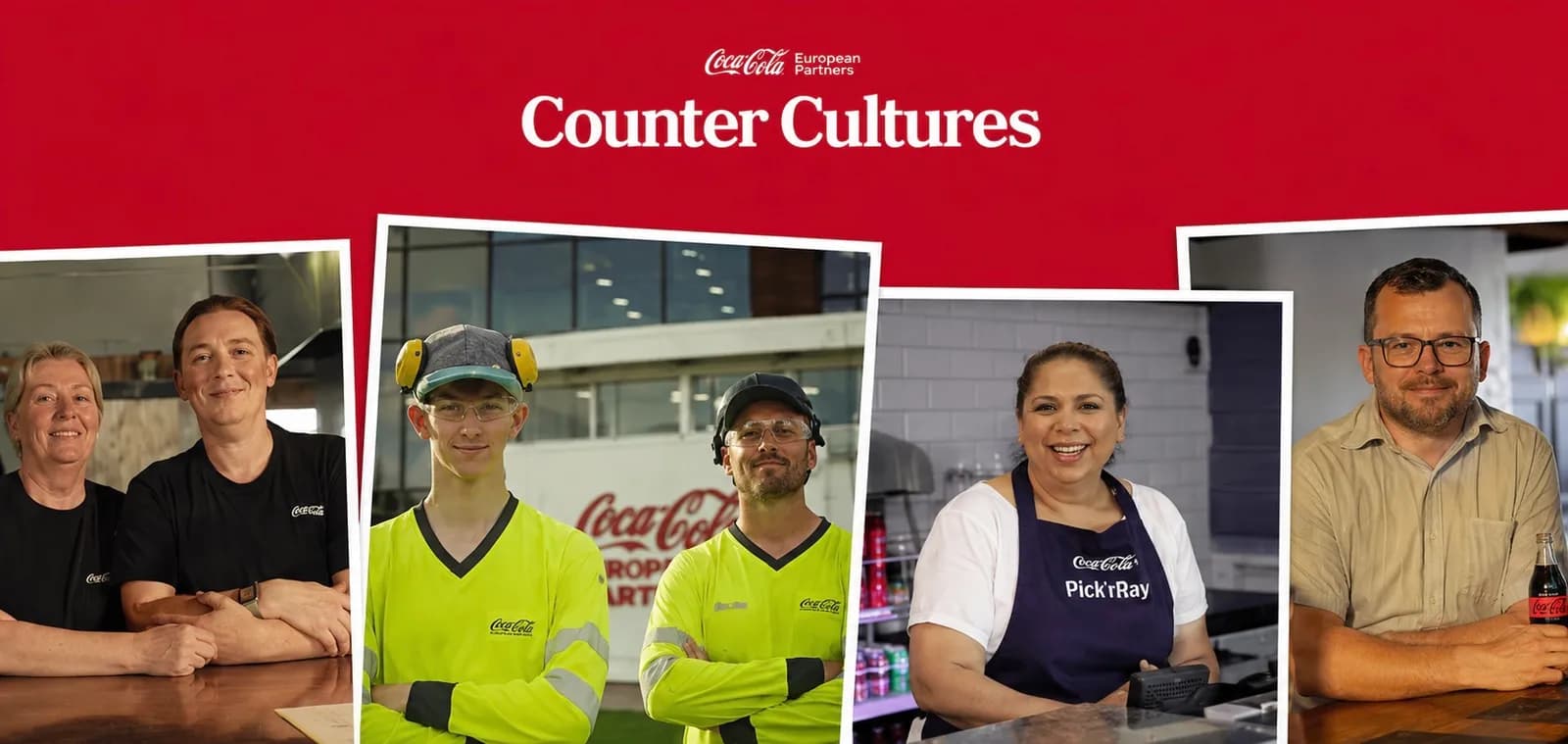
Counter Cultures is Coca-Cola Great Britain’s attempt to make an enormous, globally standardized brand feel connected to the communities that make and sell it. Set around Wakefield and nearby South Yorkshire businesses, the campaign follows the path from production to the pub, café and takeaway counter. Its objective is not simply visibility for Coca-Cola: it is to reinforce local relevance by showing the people inside its supply and service network. That is notable because the creative makes real employees and small-business owners the protagonists, rather than using a polished brand-world cast. The work also extends Coca-Cola’s earlier focus on independent retailers into hospitality, where the point of sale is more social, personal and tied to repeat local custom.
Highlights
The campaign mechanics are specific to the route a drink takes through a local market.
- The hero film follows a Coca-Cola can from the Wakefield manufacturing site to nearby hospitality businesses.
- Coca-Cola employees Mark and Lewis Baker, a father-and-son team at the Wakefield site, appear in the work.
- The independent businesses featured are Ocean Fish Bar, The Old Red Lion and Bennett’s Bites.
- The business owners are presented as family-run operators, matching the multi-generational workplace story at the factory.
- The rollout includes murals in Leeds, Birmingham, Wakefield and Manchester, plus activity on Meta, YouTube and LinkedIn.
- Each featured business is set to receive a five-figure contribution for a local initiative or cause of its choice.
MAD's Verdict
Coca-Cola uses a physical truth, not an abstract purpose line. The brand is betting that the route from factory floor to family-run counter can make scale feel earned: its can stays universal, but the people around it become locally specific. That is a better use of authenticity than casting generic “community” imagery around a global logo. Counter Cultures will win most with hospitality operators and consumers who already value familiar local venues, because the brand has made those operators the lead characters and attached tangible local-cause funding.
Industry Opinions
The Drum’s reading of the work is that Coca-Cola is using factory workers and independent operators to give a global brand a more human, local face. That supports MAD’s view that the campaign’s strength is its supply-chain specificity, not simply its community language. The Northern Gazette emphasized the South Yorkshire participants and the connection between Wakefield production and nearby family-run businesses. Its angle reinforces the campaign’s regional credibility, while also underscoring that the creative is tightly dependent on the authenticity of those local relationships.
Takeaways
The useful lesson is not “go local.” It is to give a local claim a concrete route, cast and operating commitment.