Poppi turns sorority rush into a campus-scale sampling engine
Poppi paired mass product seeding, custom chapter merch and reality-TV talent to turn RushTok visibility into a repeatable U.S. campus program. The scale is clear; the commercial return is not yet public.
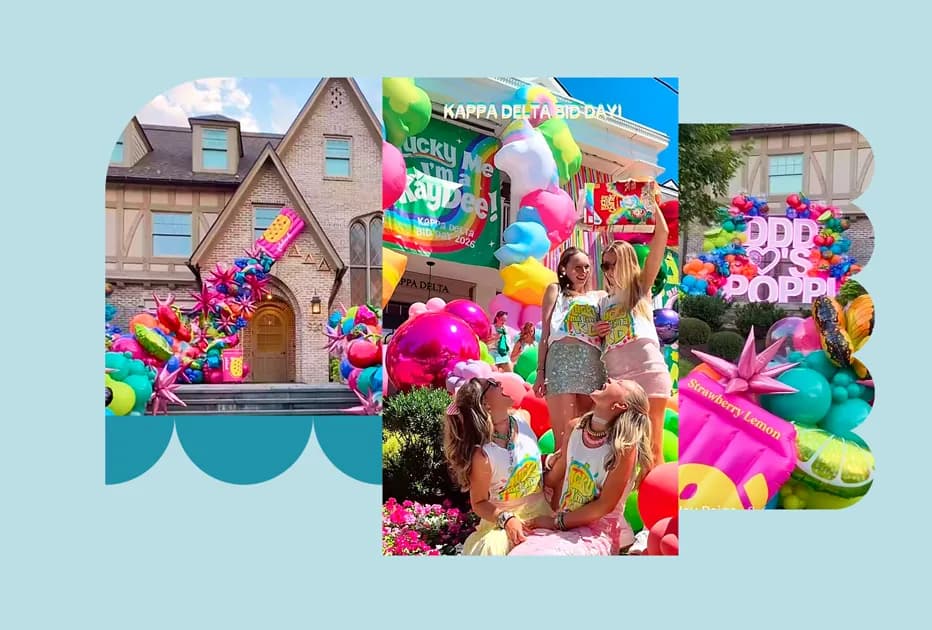
For the 2026 U.S. sorority recruitment season, Poppi pushed beyond occasional chapter gifting into a scaled RushTok program: more than 1 million cans, custom merchandise, campus stops and appearances from reality-TV personalities. The brand is putting a reported 30%–40% of its back-to-school marketing budget behind rush-related activity, betting that highly social recruitment rituals can turn local sampling into national cultural visibility.
Description
Poppi is treating sorority recruitment as both a physical trial channel and a creator-distribution channel across U.S. college campuses. The brand seeded sorority chapters before Work Week and recruitment, then supported selected moments with custom merchandise, bid-day and rush-week experiences, and pop-culture appearances designed to give members something worth filming. The move is notable because it does not rely on a single paid creator post or a one-off campus tour: Poppi is building an annual presence inside chapter rituals that already generate high-volume social content. Its wider college program extends the relationship beyond rush through student ambassadors, who share product at gatherings and surface local retail and out-of-home opportunities.
Highlights
- Poppi said it planned to send more than 1 million cans to sororities for the 2026 rush season; the brand later said it had sampled more than 1 million cans.
- The brand said it partnered with 2,000 sororities and made in-person stops at five chapters: Arizona State Delta Zeta, South Carolina Alpha Chi Omega, Kentucky Alpha Delta Pi, San Diego State Alpha Chi Omega and Texas at Austin Zeta Tau Alpha.
- The 2026 effort included custom airbrushed tees and other chapter merchandise, rather than standard product drops alone.
- Poppi planned 20,000 pieces of custom merch for the rush effort; a separate report described 28,000 pieces for more than 30 chapters, a broader figure that should not be combined with the rush-only number.
- Poppi brought in Carl Schmidt, Aniya Harvey and Rob Rausch for sorority-related appearances; its later brand recap also named Kayda Bosse, Caleb McDaniel and Chad and Sam Batchelder.
- The campus program is not confined to recruitment. Poppi’s student ambassadors are tasked with campus sampling, event activity, content and identifying local sales and out-of-home opportunities.
Results
Exact sales lift, retail sell-through, earned reach, conversion and ROI have not been disclosed, so the program cannot yet be judged as a proven commercial-growth case. What is public is meaningful operational scale: Poppi says it sampled more than 1 million cans and worked with 2,000 sororities in 2026. The company also received more than 11,000 applications for 250 places in its fall 2026 college ambassador cycle, a signal of demand for access to the program rather than proof of product sales. Rush-related activity represented 30%–40% of Poppi’s back-to-school budget, but the dollar amount was not published.
1M+
Cans sampled
Poppi’s reported 2026 total
2,000
Sororities partnered
Poppi’s reported 2026 total
11,000+
Ambassador applications
For 250 fall 2026 positions
30%–40%
Back-to-school budget share
Rush-related activity; dollar spend undisclosed
Lowlights
- The central business evidence is missing: Poppi has not publicly tied rush activity to sales lift, repeat purchase, retailer velocity, customer acquisition cost or return on marketing spend.
- The headline can and merchandise figures require careful reading. Some were announced as plans before the season, while later company posts described completed sampling; public reporting also uses different merchandise totals for different program scopes.
- A chapter activation can create strong social material without reaching beyond existing Greek-life and RushTok audiences. The model may be less efficient for campuses or communities where sorority culture is not a major social organizer.
- Recruitment is a sensitive setting. Social-posting restrictions, participant harassment and shifting university or chapter policies can reduce creator output and introduce brand-safety risk.
- No official campaign name, production partner or complete agency roster has been publicly established for the 2026 rush effort.
MAD’s Verdict
This is a smart move because Poppi is buying into a behavior, not merely an audience. Rush already creates packed schedules, visual rituals and a large base of students motivated to document chapter life. Cans, custom apparel and surprise talent give those students raw material for content while putting the product directly into the occasion. That is a stronger role than asking a creator to manufacture relevance in a feed post. The bet is really on campus density: win a handful of socially influential chapters, keep showing up all year through ambassadors and retail-adjacent activity, and make Poppi feel native to college social life. It will win where chapters have genuine enthusiasm and room to shape the activation themselves. It will fail if the program becomes a costly, uniform swag drop with no chapter-specific reason to post, no measurement beyond distribution and no evidence that sampling converts into repeat buying.
Industry Opinions
360i places Poppi among the early major RushTok investors and argues that the next step for brands is an authentic connection to chapter values and traditions rather than generic giveaway mechanics. That supports Poppi’s shift from product gifting toward experiences and creator-supported appearances. Her Campus describes a Poppi rush collaboration as a status marker for sorority houses and highlights the brand’s student-led approach. That reaction reinforces the core advantage: chapters can make the brand visible when they retain ownership of how it appears in their own traditions.
Takeaways
- Висновок 01
If a campus moment already produces participant-made content, invest in the physical details people want to wear, hold and film instead of treating sampling as the finished activation.
- Висновок 02
If using a mass-seeding model, pair broad distribution with a smaller number of high-touch chapter events; Poppi used merchandise and talent appearances to give selected moments more narrative value.
- Висновок 03
If the goal is organic social reach, let the community adapt the brand to its own rituals. Poppi’s stated approach is to let students shape how the product appears.
- Висновок 04
If rush is only one week of the calendar, build an ambassador layer that can continue product trial, event presence and local-market learning after recruitment ends.
- Висновок 05
If budget share is as large as Poppi’s reported 30%–40% of back-to-school spend, set measurement before rollout: track sampling-to-purchase, nearby retail velocity, repeat purchase and creator reach separately.
- Висновок 06
If a cultural moment carries policy or safety sensitivity, prepare for reduced posting, moderation needs and partner rules rather than assuming every activation will become public content.